Welcome To My Site |
||
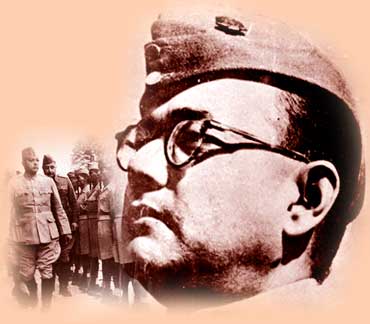
.jpg) Netaji's Contribution To Independence Struggle International Netaji Center (INC) in USA aims to provide comprehensive information on the role played by Netaji in India's independence struggle from abroad. However, before presenting information and analyses in this area, INC provides the following summary review of Netaji's activities in India that contributed substantially to India's freedom: Netaji played an unique role in India's freedom struggle from within during 1921-1941 -- as chronicled below. During 1922-25, Netaji was a major leader in the Congress 'Swarajya' (or self-rule) group; this group exposed the sham post-war period (1920) British offer of dyarchy or 'joint rule,' which other Indian politicians accepted or agreed to accept. This led to a more favorable political concession from the British in 1928-29. During 1925-38, Netaji was the leader in Bengal Congress Party and led Bengal in working committee of the national Congress Party. Throughout this period, he supported national labour movement, fought internal communal forces and fully won the trust of the minority groups in India. No other Indian national leader achieved all these major objectives in such a short period. In 1930, Netaji persuaded the Congress Party in its national meeting to adopt a resolution demanding 'complete independence ‘ from the British colonial rule . On his leadership January 26 was declared as India's Independence Day , marking this demand. This progressive step pre-empted then prevalent thinking in the Congress Party that the British, on its own, would grant independence to India in due time. It also brought back to the Party high popular support from the Indian masses . In 1936, Gandhiji publicly stated that he could not think of a better person than Netaji to lead the Congress party through the prevailing critical period. In 1937 and again in 1938, Netaji was elected to lead India as the President of the Congress Party. He was acknowledged as the spokesman of the Party and of the nation during this period, both in India and in Europe including England. No other leaders, except Gandhiji, reached this pinnacle of eminence during 1921-41. 2. Netaji's contemporaries accepted Netaji as a major leader of the freedom struggle. The British rulers accepted with serious concern Netaji as the most dynamic and influential political leader in all sections and religious groups of the Indian population. This realization induced them to keep him in prison for prolonged than any other leader during 1921-41. The British imprisoned Netaji to unhealthy and notorious prisons , inside and outside of India, even when his health was poor; and no other Indian politicians received this harsh treatment during 1921-41 , since the British considered him as the number one enemy of the colonial interest in India and to its foundation throughout the world. The British understood that Netaji's ideas always inspired young idealists to fight stronger for freedom; thus, they considered Netaji as the most fearsome adversary. Political leaders of the largest minority group, Muslims, acknowledged and appreciated the leading role played by Netaji in India politics. Even Mohamed Ali Jinnah, who is acknowledged by all as the Father of Pakistan, had so much trust and regard for Netaji that he was willing to give up his idea of a religiously divided India , if Netaji led the nation. Muslim leaders of India's eastern states echoed the same sentiment during the thirties. Netaji provided directions, time and again, to all the political groups of his time to formulate their policies toward freedom struggle. It is Netaji who formulated the two dominant battle cries in India's freedom struggle: (a) "complete independence (1930)," and (b) "quit India (1938-42)." Between 1938 and 1941 , during the second world war , Netaji saw the opportunity of gaining India’s independence by forcing the British colonial power to come terms with India against India’s consent to help them in the war. The Congress Party initially disagreed with this view . But Netaji’s arm struggle in 1942 from outside India and its reaction with the Indian masses changed this attitude and pushed Congress to adopt goals proposed by Netaji years earlier. |
  Pre & Post Independence Polititions (Not Freedom Fighters) 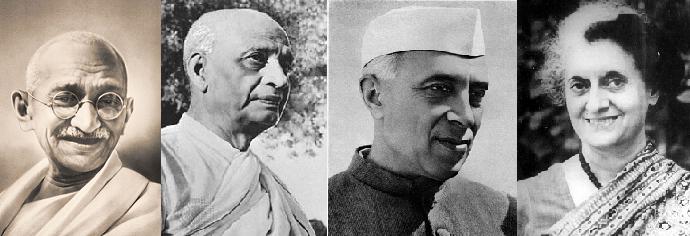 স্বাধীনতার প্রাক্কালে কংগ্রেস পার্টির প্রয়োজন হয় এমন একজনের যাকে সামনে রেখে দেশের শাসন ভার ইংরেজদের থেকে নেওয়া যায়, আর মোহনদাস করমচাঁদ গান্ধীর নিজেকে ভগবান মনে করা আর সমগ্র ভারতবাসীকে মনে করানোর সুপ্ত মনের ইচ্ছা এই দুটি প্রয়োজন একে অপরকে কাছে টানে, স্বাধীনতার পর জাতির জনক নাম নিয়ে আজও আমাদের মাথার উপর নৃত্ব করছে এই বিচক্ষণ রাজনীতিবিদ, আর "নেহেরু" পরিবার দেশটাকে প্রায় শেষ করতে বসেছে, দেখা যাক কবে আমাদের দেশের নাগরিকগনের নিদ্রাভঙ্গ হয়....................  |
|
